Postdoctoral Research Scientist
Exploring how temperature shapes the physiology,
ecology, and fate of fishes in a changing world.
I am a fish ecophysiologist currently conducting postdoctoral research at the University of Minnesota in Dr. Gretchen Hansen's lab. My work investigates how temperature — and the changes wrought upon it by a warming climate — shapes the physiology, ecology, and conservation of aquatic species.
My research spans a broad range of taxa and systems, from Chinook salmon in California rivers to Antarctic notothenioids beneath the Ross Ice Shelf, Great Lakes coregonids, green sturgeon, and threespine stickleback. A common thread runs through all of it: understanding how organisms are adapted to their thermal environments, how that adaptation varies among populations, and what it means for their survival under global change.
Outside the lab I enjoy sci-fi, mountain biking, watercolor painting, and escaping into the wilderness for camping, biking, hiking, and birding.
Integrating physiology, ecology, and conservation across aquatic systems
Quantifying how Chinook salmon populations from different river systems are physiologically adapted to local thermal conditions — and what that means for conservation under a warming climate.
→
Studying the combined effects of ocean warming and acidification on notothenioid fishes at McMurdo Station — some of the most thermally sensitive vertebrates on Earth.
→
Investigating differences in oxythermal tolerance among embryos and larvae of multiple Great Lakes whitefish and cisco species to inform physiologically guided abundance models.
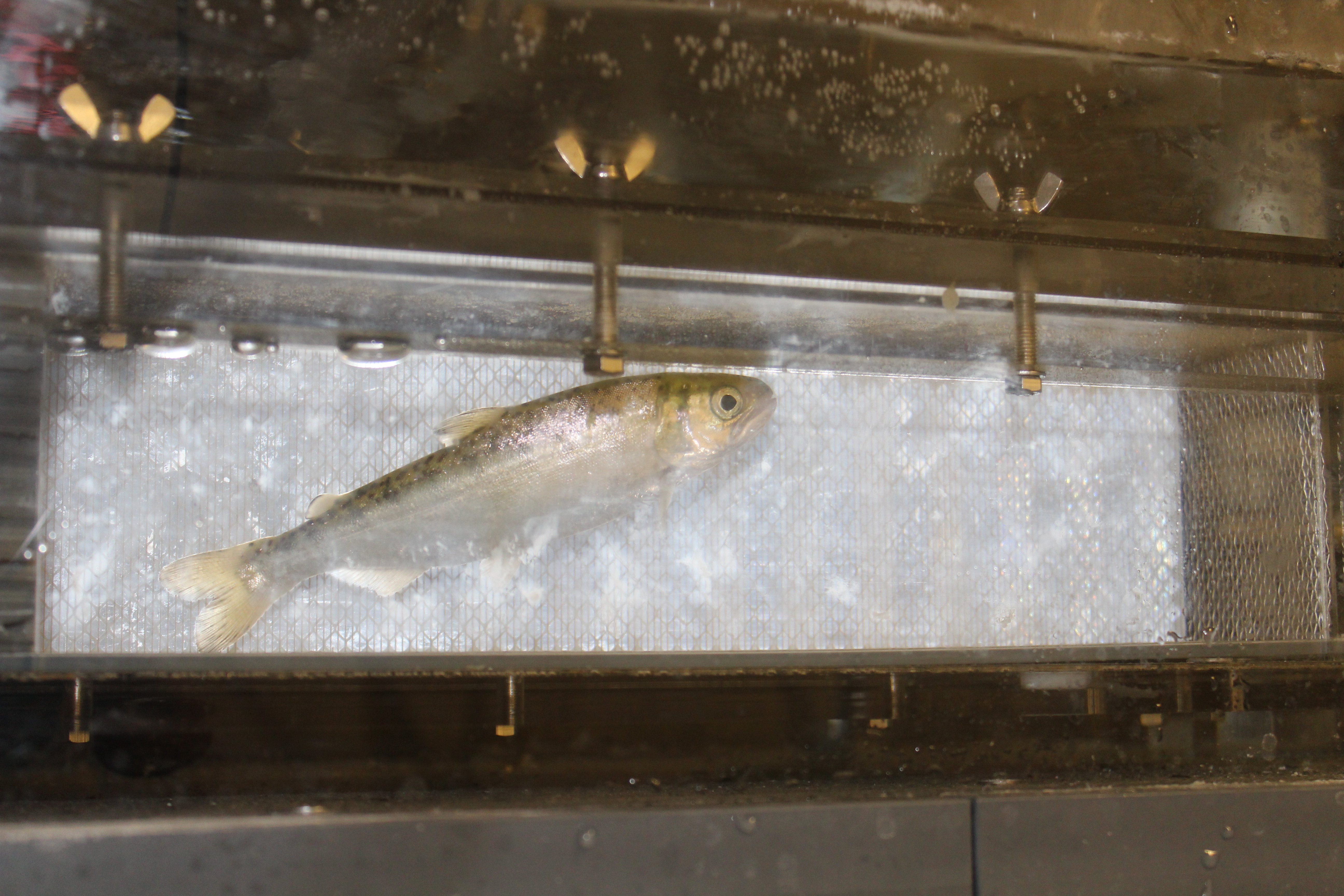
→A laser-equipped tunnel for the assessment of multiple burst swimming traits in fishes.
Download PDF →Patterns of Interpopulation Variation and Physiological Trade-offs in the Acute Thermal Tolerance of Juvenile Chinook Salmon (Oncorhynchus tshawytscha).
Frontiers in Fish Biology
Download PDF →Effects of acclimation temperature and feed restriction on the metabolic performance of Green Sturgeon.
Conservation Physiology
Download PDF →